Letterpress survives because it prints words into paper rather than merely onto it. Raised metal type, inked and pressed firmly into soft cotton board, leaves a physical impression that a fingertip can find — a result that neither offset lithography nor digital presses were designed to give. The method goes back to Gutenberg in the 1450s; the studios keeping it alive in Britain are thoroughly current, and growing.
How does letterpress printing actually work?
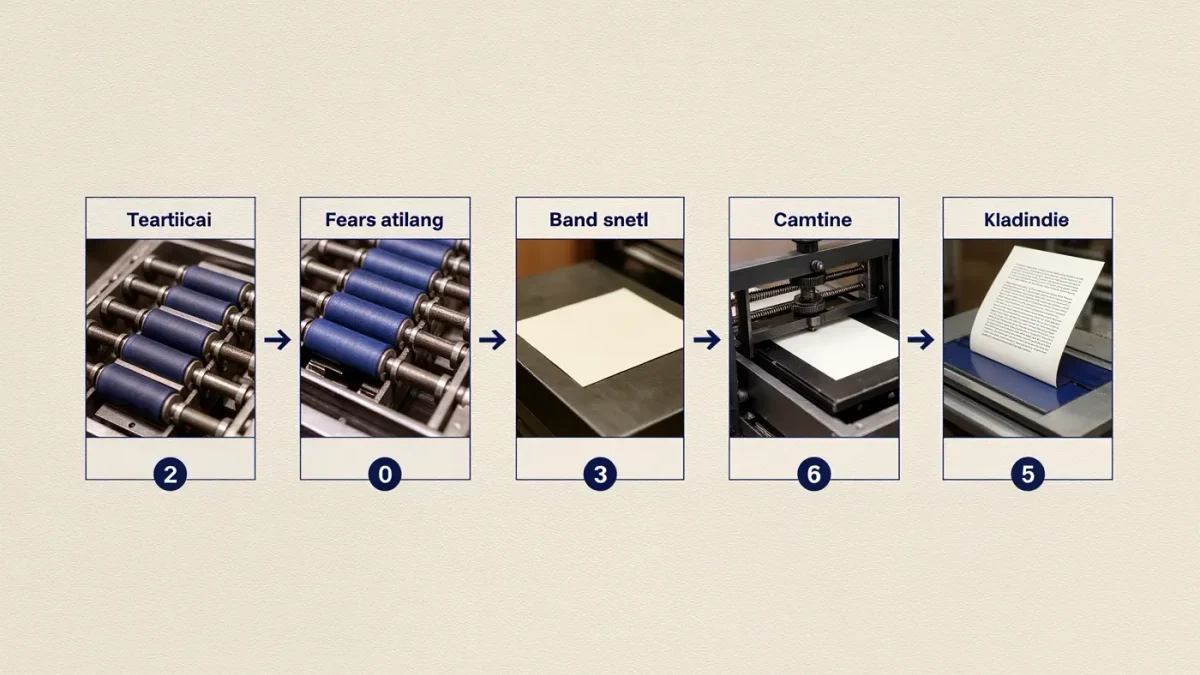
Letterpress is relief printing: whatever stands proud of the surface takes the ink, and everything else stays blank. A compositor assembles metal type, letter by letter and line by line, into a metal frame called a chase, locking it tight with wooden wedges so nothing can shift. Rollers spread a thin, even film of ink across the raised surface, paper is laid against it, and pressure transfers the image. The standard height of Anglo-American type — 0.918 inches, or 23.3 millimetres — has stayed constant for well over a century, so a piece of type cast in the 1890s still prints perfectly on a working press today.
What kinds of press do British studios run?
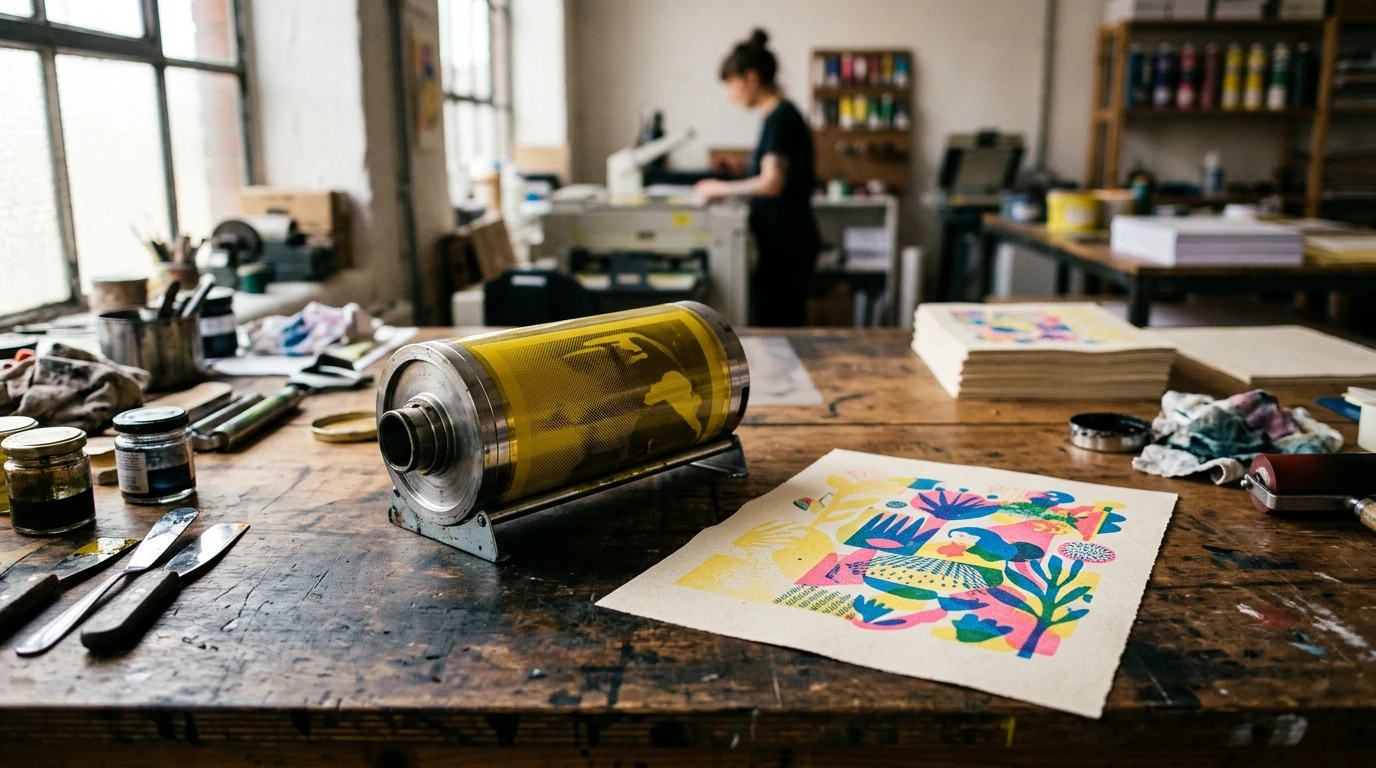
Three families of machine dominate. The iron hand press, including the British Albion design of the 1820s, works a lever to press flat platen against flat bed, one sheet at a time — slow, loud and beloved for its directness. Platen presses mechanised the same action: the small Adana platens built in Britain from the 1920s sat on desktops and powered a generation of amateur and small-job printing, while bigger factory platens churned through commercial work at thousands of sheets an hour. Finally, cylinder proof presses, such as the Vandercook machines that began as newspaper proofers in the early twentieth century, carry paper on a rotating cylinder across a flat bed of type — the favourite of many contemporary studios for large format work.
Why did commercial letterpress nearly disappear?
It was replaced, twice. Offset lithography, printing from a flat plate via a rubber blanket, spread through the printing industry through the middle decades of the twentieth century and offered speed, photographic reproduction and cheaper plates. By the 1970s most commercial letterpress work — stationery, invoices, books — had migrated away, and type foundries were closing as phototypesetting and then digital setting took over. For a while the presses, and the wooden trays of type that fed them, were sold off as scrap or left to gather dust in corners.
What sparked the revival?
Art schools, weddings and impatience with the screen. From the 1980s and 1990s, designers trained on computers went looking for processes with a physical result, rescued presses from closing print shops, and taught themselves composition from scratch. Letterpress suited the moment perfectly: short runs, tactile cards and invitations, and the deep impression into thick cotton stock that became the signature of the revival. Interest in the process has stayed strong in Britain since, alongside a wider return of craft audiences to analogue making — a shift that arts desks such as BBC Culture have followed with steady attention across print, ceramics and textiles alike. Restorers tell of presses rescued from barns, school cupboards and collapsing print works, repainted, re-inked and back in service within months.
Why does the impression run so deep?
Here lies a pleasant irony. Skilled commercial printers of the letterpress era aimed for what they called a kiss impression — the lightest touch that still transferred a clean image, because heavy pressing wore out type and paper alike. The deep deboss that modern clients adore is largely a contemporary taste, made possible by soft, thick papers. Cotton boards in the region of 300 to 600 grams per square metre, originally milled for fine stationery, now absorb a visible bite of perhaps a fraction of a millimetre without cracking. The word for that bite, used affectionately in studios, is simply the impression.
What do studios actually print on letterpress now?
Business cards, wedding stationery, greetings cards, artist prints, book covers and labels — short-run work where touch matters more than unit cost. Many studios mix tradition with pragmatism: hand-set metal type for signature lines, photopolymer plates made from digital artwork for everything else. The result keeps the impression, the deckled cotton stock and the slow rhythm of the press, while sparing the compositor from setting a hundred identical invitations by hand. Ink is mixed by eye to Pantone references, one or two colours per pass, and each sheet is inspected as it comes off.
Is letterpress difficult to learn?
The basics can be taught in a weekend workshop; the judgement takes years. Composition demands spelling checked backwards in a mirror, spacing calculated in ems and ens, and a whole vocabulary of leads, quads and quoins. Presswork demands consistent ink, consistent packing and consistent nerves. Britain now has a network of small studios offering courses, open access press hire and apprenticeship-style training, which is how most working letterpress printers learned — one tray of type at a time.
Why does any of it matter?
Because letterpress fixes attention. A printed sheet that took an hour on a hand press is read differently from one that took a second on a digital press, and both printer and recipient feel the difference. In a studio full of rescued iron and brass, an old technology is not being preserved behind velvet ropes; it is being used, worn and passed on — which is the only kind of preservation a craft really wants. A card printed this way carries its making on its face — the kiss of ink, the soft depression of each letterform — and that is why such small objects so often survive in drawers for decades.