Every printed cloth, wallpaper and gift wrap begins as one small tile of artwork, repeated until it covers the surface with no visible joins. That tile is the pattern repeat, and the layout chosen for it — full-drop, half-drop or tossed — quietly decides whether the finished design feels architectural, flowing or scattered. Most textile tiles measure somewhere between fifteen and sixty centimetres, small enough to judge in the hand and large enough to carry a scene.
What is a pattern repeat, exactly?
A repeat is the smallest rectangle of artwork that can be duplicated, like floor tiles, to cover any width of fabric or wall. Draw an imaginary box around the unit, copy it to the left, right, above and below, and the pattern should continue forever without a seam. The craft lies in making sure every motif that leaves one edge re-enters at the opposite edge at exactly the same height, a discipline designers call matching the edges. When the match fails, the eye finds the join instantly; when it succeeds, the surface reads as one continuous, unbroken field.
How does a full-drop repeat work?
The full-drop, sometimes called a straight or block repeat, is the simplest arrangement: the tile sits directly beside and directly above its neighbours, corners meeting corners, like squares on a chessboard. It is the layout of formal damasks, many toiles and most geometric prints, and it carries an honest, architectural quality — the underlying grid is proudly visible.
That visibility cuts both ways. Because every copy starts at the same height, strong motifs stack into columns and rows, which reads as calm rhythm in a small dose but as heavy striping across a wide curtain. Designers usually soften a full-drop by placing quieter filler motifs between the heroes, so the grid underpins the pattern without announcing itself.
Why is the half-drop the textile designer's favourite layout?
In a half-drop repeat, each new column of tiles is shifted down by exactly half the tile's height. The motif that left the bottom corner of one column reappears halfway up the next, so the eye can no longer find a horizontal line to follow. The same motifs, rearranged, suddenly appear to meander across the cloth.
This is the workhorse of surface pattern design. The half-drop spreads attention evenly, disguises the construction and flatters flowing subject matter — trailing stems, scattered blooms, drifting leaves. Its close cousin is the brick repeat, which shifts alternate rows sideways by half a tile's width instead; the principle is identical, merely turned through ninety degrees.
What does a tossed repeat do differently?
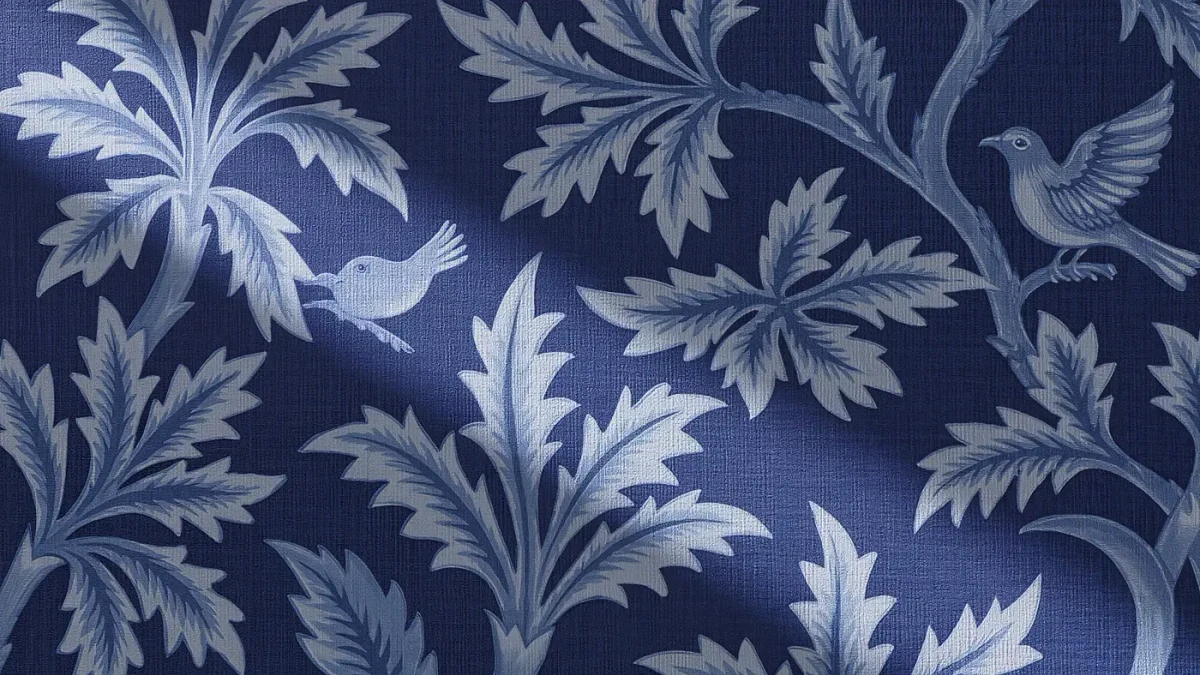
A tossed, or random, repeat abandons the grid altogether. Motifs are scattered across the tile at varied angles and heights, then balanced so that no direction dominates and no empty pocket gapes. Done well — think of a classic ditsy print or a conversational scatter of tiny objects — the result feels effortless, as though the motifs fell like blossom onto the cloth. Done carelessly, it looks noisy, because the eye craves some underlying order even in apparent randomness. Most tossed prints are engineered with great care, motifs nudged little by little until the density reads evenly from a distance.
Related stories: How William Morris's pattern rules still shape British design · How small studios design craft packaging that survives the post.
What other repeat layouts complete the family?
Between these three sit several supporting arrangements. A mirror repeat flips alternate tiles so that every motif appears beside its own reflection, useful for symmetrical florals. An ogee repeat locks motifs into arching diamond frameworks, a device loved by medieval weavers and Art Nouveau designers alike. A stripe alternates bands of motif and ground. Professional pattern collections often mix several of these within one range, giving buyers variety without losing the family likeness.
| Layout | How it tiles | What it does best |
|---|---|---|
| Full-drop | Corners meet corners in an even grid | Formality, damasks, geometrics |
| Half-drop | Each column shifted by half a tile's height | Flowing florals and all-purpose prints |
| Brick | Each row shifted by half a tile's width | Stripes that must not stripe |
| Tossed | Motifs scattered at varied angles | Conversational and ditsy prints |
| Mirror | Alternate tiles flipped into reflection | Symmetrical, decorative motifs |
How do designers test a repeat before it prints?
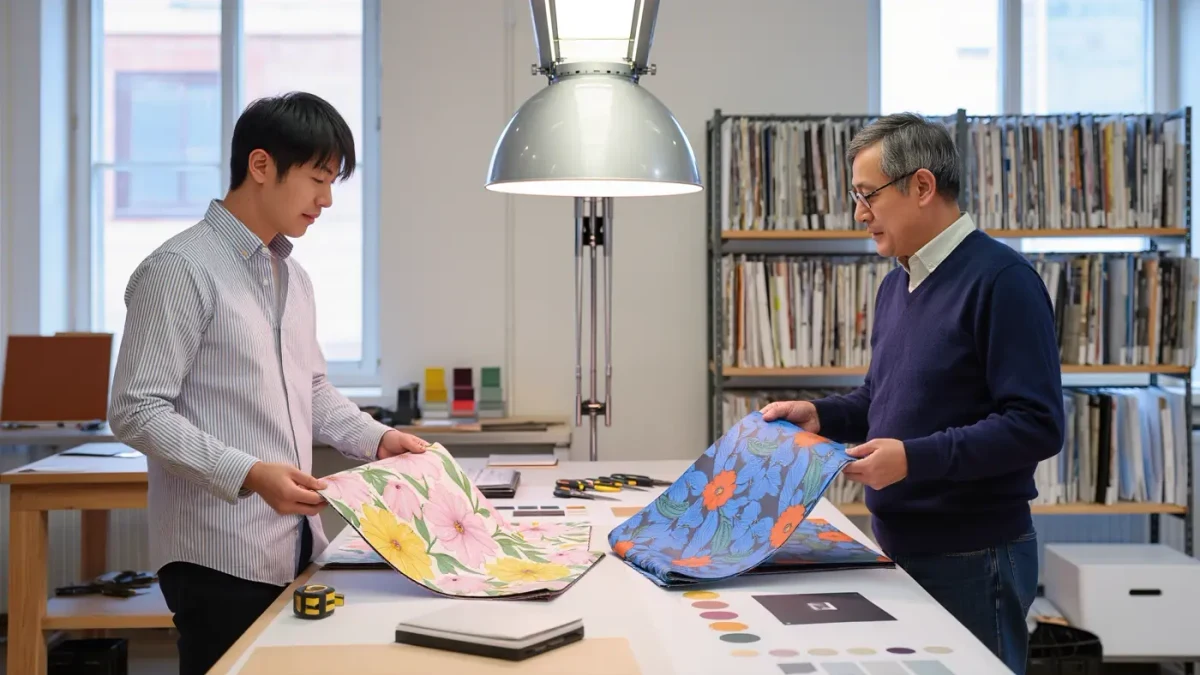
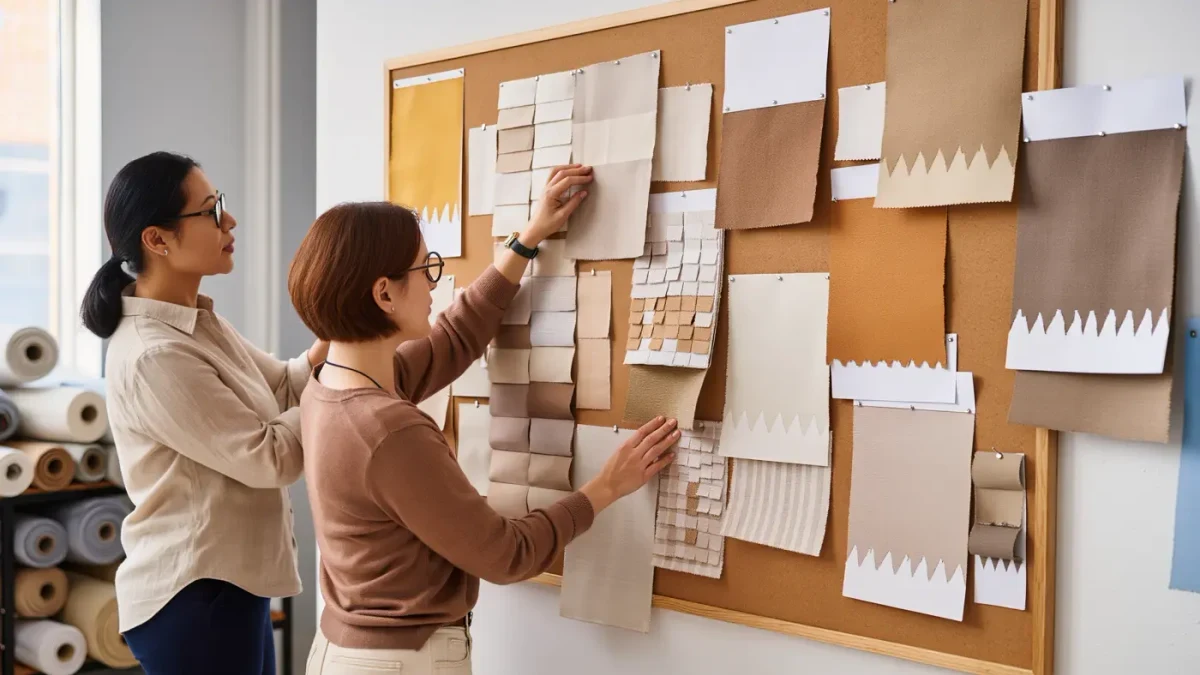
Testing is a ritual. Designers tile their artwork across a large digital canvas, nine copies or more, then zoom out until the single tile becomes a field. A pattern that charms at postcard size can turn into regimented rows across a three-metre curtain; only the tiled test reveals it. Physical proofing matters just as much — sample fabric is printed, cut and pinned, so the repeat can be checked across a seam and around a fold.
Wallpaper adds a practical wrinkle. The roll width and the printed repeat together determine how much paper is lost matching the pattern from drop to drop, which is why British wallpaper has carried its repeat length on the label for generations. Museums make study easier still: the Smithsonian's open-access design collections place thousands of historical textiles online, tiled and zoomable, for anyone curious to trace the grids beneath them.
Which repeat suits which project?
As a rough guide, formality invites the grid and movement invites the drop. Upholstery and wallpaper, seen from across a room, reward clear repeats on a generous scale with strong tonal contrast; dressmaking cottons, seen at arm's length, carry smaller tiles and denser tosses; quilting fabrics favour tossed layouts that let every patch differ. A half-drop also drapes more forgivingly over a body or a sofa, while a strict full-drop can march its columns unflatteringly across a shoulder or a seat cushion. The layouts themselves are simple; the judgement is everything. Choose the arrangement the subject wants, test it far larger than feels necessary, and the repeat will quietly disappear into the pattern it supports.