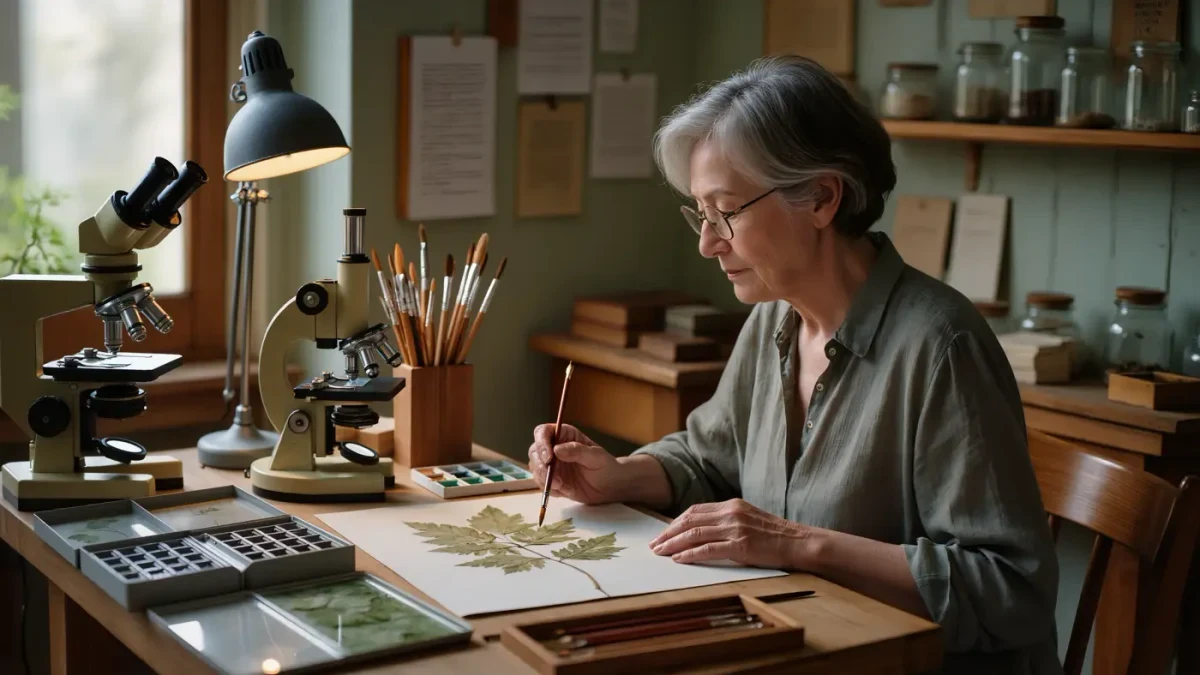
Natural history illustration still matters because a painted plate can show every diagnostic feature of a species at once — the leaf base, the flower structure, the seed case — arranged with a clarity no single photograph achieves. The tradition reaches back through Pierre-Joseph Redouté (1759–1840) and Maria Sibylla Merian (1647–1717), and scientists still commission it for floras, field guides and the formal description of new species.
What can a painted plate show that a photograph cannot?
A photograph records one individual at one moment: a leaf torn, a petal not yet open, a specimen grown in shade. An illustration synthesises many observations into a single ideal composite that is typical rather than individual. Every part can be shown at its most informative stage, damaged material can be corrected against reference, and dissections — the ovary laid open, the seed case in section — can sit beside the habit drawing on one sheet. The plate is not competing with the camera; it is doing a different job, summarising a species the way a good diagram summarises a mechanism. That is why monographs and identification guides have kept a place for drawing long after photography became cheap.
How do botanical artists work from herbarium specimens?
Herbaria — the libraries of the plant world — hold millions of pressed, dried specimens on archival sheets, each labelled with its collector and place of collection. Working from them is a discipline of reconstruction: the artist measures the dried material, softens its geometry back into three dimensions in the mind, and consults field notes and living relatives to restore colour and posture. Every measurement matters, because the ratio of leaf width to length or the exact angle of a flower's parts may be the feature that separates one species from its nearest cousin. The result is a drawing that is simultaneously an artwork and a piece of scientific documentation, accurate enough to be cited.
Why do scientists still commission natural history illustration?
When botanists describe a species new to science, the illustration records the diagnosis: the features that make the plant itself rather than a near relation. Photography supports the work, but a plate standardises it, presenting the crucial characters at a consistent scale and orientation. Field guides lean on the same strength, since a painted plate of a bird in characteristic posture, or a wildflower with its basal leaves shown, teaches the eye what to look for in a hedge. Museums, botanic gardens and publishers continue to fund this work, and the artists who do it form a small, serious and increasingly celebrated profession.
Related stories: How Picture Book Illustration Grows From Tiny Thumbnails to Finished Artwork · How Editorial Illustration Rises to a One-Day Magazine Brief.
What makes a botanical illustration scientifically useful?
The virtues are specific and learnable:
- measured proportion, with the important ratios kept exact even when the drawing is enlarged or reduced
- diagnostic features prioritised, so the identifying characters are unmissable rather than implied
- dissections and detail studies ranged beside the main drawing at stated scales
- habit included, showing how the plant actually holds itself in the field
- restraint in style, since flair that distorts is worse than no drawing at all
Within those limits there is enormous room for beauty, and the best plates achieve the rare double distinction of being cited in science and hung on walls.
Where does photography fit in the modern practice?
Photography and drawing are collaborators, not rivals. A photograph captures habitat, behaviour and light in a way a plate never could, and it has transformed reference gathering: an artist can now check a detail against images of living populations on another continent within minutes. But the camera's honesty is also its limitation — it records what happened to be there, in the light that happened to fall. The illustrator's constructed image remains the tool of choice whenever the requirement is comparison, emphasis or completeness, which is why a well-made flora pairs photographs for recognition with plates for certainty. Museums and herbaria increasingly digitise both kinds of record side by side, which has made the complementarity plain to see: the photograph anchors a plant in a moment, the plate anchors it in a definition, and together they answer questions neither can alone.
Where is the tradition kept alive?
Botanical and natural history art is taught, exhibited and collected with real vigour. Diploma courses, botanical art societies and museum exhibitions sustain a community whose standards descend in an unbroken line from the great florilegia, and contemporary work is acquired by the same institutions that care for the historic collections. Much of that heritage is newly accessible: the open access collections at the Smithsonian put centuries of natural history illustration a click away, at resolutions high enough to study brushwork and structure together, which has quietly become one of the best drawing schools any aspiring natural history illustrator could attend.
Can natural history illustration be learned?
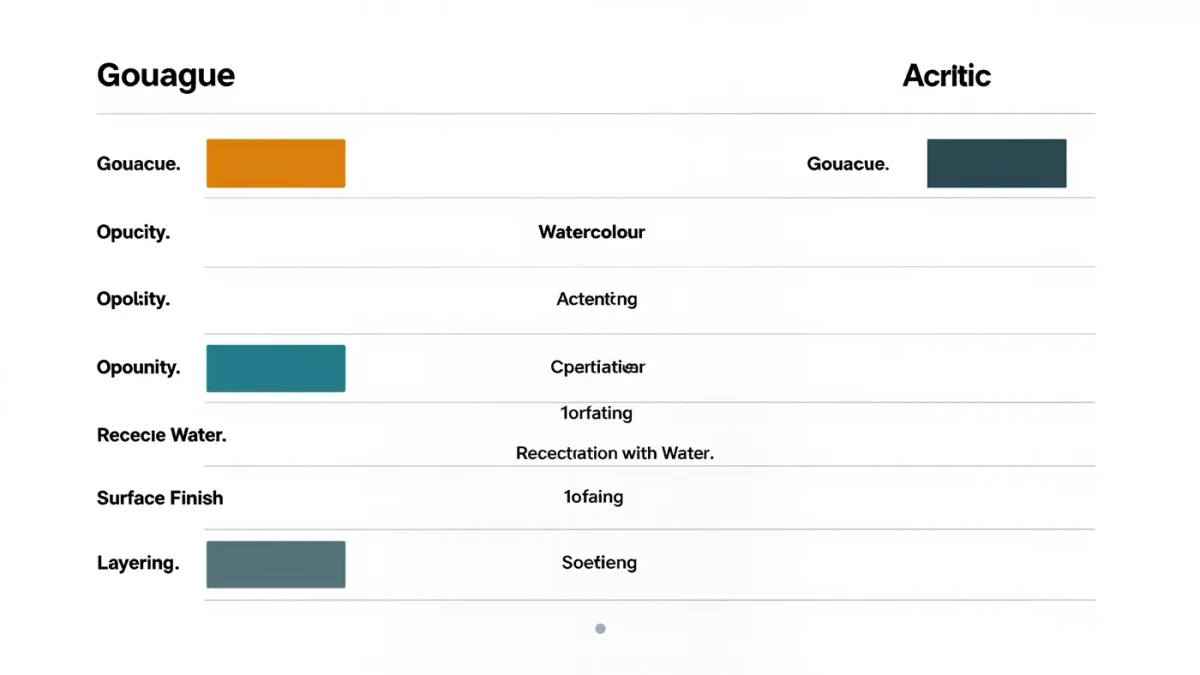
Yes, and its teachers insist that observation matters more than raw talent. The beginner's path is well worn: draw what is actually there rather than what a symbol of it suggests, measure constantly, keep a sketchbook of single studies, and learn enough botany or zoology to know which features matter. Watercolour is the traditional medium for plates, prized for its precision on hot-pressed paper, though coloured pencil and gouache have their adherents. Patience is the real entry requirement — a single finished plate can take weeks — and the reward is a practice where art and attention reinforce each other, season after season.